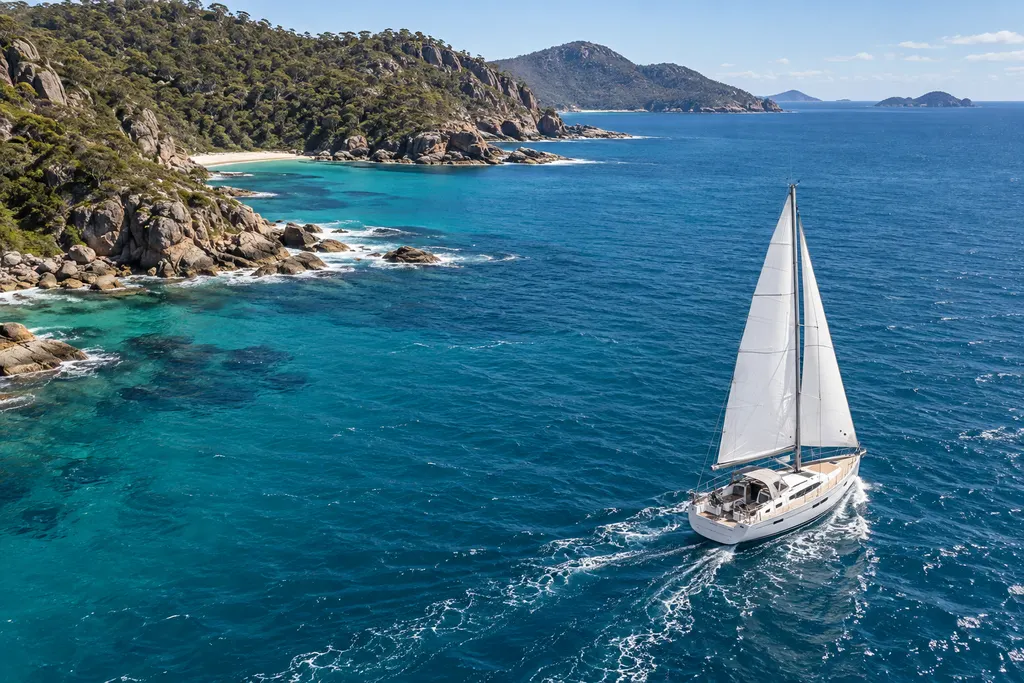
SA · Regional guide
Marine autopilots Adelaide and the South Australian gulfs
Gulf St Vincent and Spencer Gulf: shallow water and wind against tide, hot northerlies, the Backstairs Passage race and long legs between safe harbours.
- State
- South Australia
- Waters
- Gulf St Vincent, Port Adelaide, Outer Harbor and North Haven, Backstairs Passage and Kangaroo Island
- Recommended
- 4 systems
- Reviewed
- September 2026
South Australian cruising is gulf cruising. Two long, shallow arms of water reach up into the state, and almost everything a local boat does happens inside them or crossing between them. The legs are longer than they look on a chart, the water is shallow enough to kick up an unpleasant chop, and the anchorages are often open roadsteads rather than harbours.
That geography suits autopilots well. Most passages are straight lines of 20 to 60 miles with little to dodge, and a shorthanded crew can cover a lot of ground with the pilot doing the steering. What the gulfs punish is complacency about weather, because a hot northerly followed by a south-westerly change will find you a long way from shelter.
The two pinch points are Backstairs Passage, between the mainland and Kangaroo Island, where the tide races, and Investigator Strait on the other side of the island. Both concentrate current and sea into water that is otherwise fairly benign.
Waters covered
- Gulf St Vincent
- Port Adelaide, Outer Harbor and North Haven
- Backstairs Passage and Kangaroo Island
- Investigator Strait and the Yorke Peninsula
- Spencer Gulf and Port Lincoln
- The exposed Coorong coast to the south-east
Browse all places on this map
Local planning notebook
Autopilot passage and installation planning in Adelaide and the Gulfs
When planning from Adelaide or elsewhere in the gulfs, assess the complete itinerary rather than the outward leg alone. Ask how weather changes and the length of the day affect the crew’s ability to take over if the pilot becomes unavailable.
What to ask at the handover
Keep a written sea-trial baseline and note whether the system was demonstrated under sail, engine or both. A supported mode that was not tested should remain a handover item.
Your sea-trial log →Before leaving Adelaide and the Gulfs
This is planning context, not a live forecast or navigation instruction. Check the information that can change before each trip.
Marine Safety SA (Department for Infrastructure and Transport) ↗Bureau of Meteorology marine forecasts ↗Prepare a brief for a local installer →Regional equipment suggestions are editorial starting points. They do not identify a local branch, approved installer or business affiliation.
Adelaide gulf winds, shallow water and dodge tides
The summer pattern is a building northerly, often hot and dry, followed by a south-west change that can arrive at 25 to 30 knots. In the shallow upper gulf that change stands up a short chop almost immediately. Autopilot response needs to suit that chop, and crews need a plan for reefing that does not depend on the pilot holding a course through the shift.
Tides in the gulfs behave oddly compared with the east coast. The ranges are modest but the streams still matter in the narrows, and South Australia has the dodge tide, a period around neaps when the tide barely moves for the best part of a day. It is a local quirk worth understanding when planning a departure, because the stream you were counting on may simply not turn up.
Backstairs Passage is the exception to the general calm. The stream runs hard between Cape Jervis and Kangaroo Island, and with wind against it the passage produces a short, violent sea out of all proportion to the forecast. Cross it with the tide, keep the pilot on a track rather than a heading so the set is obvious, and expect to hand steer if it gets up.
- Hot summer northerlies followed by sharp south-west changes
- Shallow gulf water producing steep chop in a fresh breeze
- Strong tidal streams in Backstairs Passage and around the island approaches
- Dodge tides around neaps, when tidal movement almost stops
- Long distances between all-weather refuges once you leave the metropolitan coast
Aquaculture is a navigation hazard here
South Australian gulf boat types and autopilot requirements
South Australia has an unusually strong trailer sailer and small cruiser culture, with boats launched from ramps up and down both gulfs for a week of coastal camping. Many are tiller steered and under four tonnes, and for them a cockpit pilot is all the automation they need or want.
The larger yachts are based around North Haven and the metropolitan coast, mostly wheel-steered cruisers of 35 to 45 feet doing gulf passages and the trip to Kangaroo Island. At the other end of the state, Port Lincoln supports a serious commercial fleet, including the tuna industry, alongside offshore fishing boats that work long days in open water.
- Trailer sailers and small keelboats: cockpit tiller pilot
- Gulf cruising yachts 35 to 45 ft: wheel or below-deck drive with track steering
- Offshore fishing and power boats: hydraulic pack with fast override
- Trailer boats crossing to the islands: outboard pilot, cable or hydraulic
Recommended
Systems that suit Adelaide and the Gulfs
The natural fit for the state’s big trailer sailer fleet. Light, removable between trips and capable of steering a small keelboat across the gulf while you make lunch and check the chart.
Good on a 35 to 38 foot gulf cruiser doing North Haven to Edithburgh and back. Straight-line gulf passages are exactly the work an entry-level Evolution pack does well.
Worth it on a powered gulf boat already running Simrad or Lowrance electronics. Depth contour tracking is genuinely useful along the shallow edges of the gulfs, treated as an aid rather than a route.
The practical answer for the trailer boats that cross to Kangaroo Island or fish Spencer Gulf. It makes a two-hour run to the grounds a one-person job rather than an endurance event.
Passages
Typical local passages and the autopilot on each
North Haven to Kangaroo Island
A long gulf leg finishing with Backstairs Passage, which is the part that matters. Time the passage with the stream, use track steering so any set is visible early, and be ready to take the helm if wind meets tide. American River and Penneshaw are the usual destinations, and both want a hand-steered approach.
Up the gulf to Edithburgh and Port Vincent
Classic gulf cruising: 40 miles of straight sailing with the pilot doing the work. Watch the depth as you close the Yorke Peninsula coast, keep an eye on the forecast change, and remember that most anchorages here are open to at least one quadrant.
Across Investigator Strait to Port Lincoln
An exposed crossing towards a working port with a substantial aquaculture industry around it. Plan the arrival for daylight, plot clear of the lease areas, and expect commercial traffic. The pilot handles the crossing; you handle the last few miles.
South-east along the Coorong coast
A committing leg with no usable refuge for a long way and a coast that is unforgiving in a south-westerly. If the pilot is going to fail, this is the worst place for it, so carry spares and be able to steer by hand for hours. Most crews wait for a settled window rather than pushing on.
- The tidal race in Backstairs Passage, particularly with wind against stream
- Aquaculture leases, pens and mussel lines, notably around Port Lincoln
- Shallow banks and shoal edges through both gulfs
- Commercial shipping at Outer Harbor, Port Pirie, Whyalla and Port Lincoln
- Long distances between refuges, with open roadstead anchorages
- Sharp south-west changes behind a hot northerly in summer
Instruction around Adelaide and the gulfs
Australian Sailing affiliated clubs operate along the metropolitan coast and around both gulfs, and they run the keelboat and safety courses most owners start with. Several instructors teach on owners’ boats, which is the only way to learn your own pilot properly. Marine electronics installers cluster around the Port Adelaide and North Haven precincts, with fewer options once you go further afield, so plan work around a trip to town.
Licensing and safety equipment requirements come from the Department for Infrastructure and Transport, and they apply regardless of who is steering. Indicative costs: half-day handover $300 to $600, private on-water tuition $90 to $150 an hour, RYA Day Skipper practical over five days $1,800 to $2,600. Confirm pricing when you book.
- Ask for the sea trial in the afternoon chop, not the morning glass
- Have the pilot set up for the boat loaded as you actually cruise her
- Cover what to do when the change arrives while the pilot is steering
- Check licence and safety gear requirements with Marine Safety SA
Questions
Adelaide and the Gulfs: frequently asked
What is a dodge tide and does it matter?
It is a South Australian phenomenon around neaps when the tide barely moves for close to a day. It rarely causes danger, but it does mean a planned tidal assist may not appear, which matters on longer gulf legs and in the passages around Kangaroo Island.
How dangerous is Backstairs Passage?
It is fine with the tide in moderate conditions and genuinely nasty with wind against a spring stream. Plan the crossing around the tide, use track steering so the set shows up early, and be prepared to hand steer through the worst of the chop.
Do I need a licence to operate a boat here?
South Australia requires a boat operator licence for most powered vessels, administered by the Department for Infrastructure and Transport. It has nothing to do with the autopilot, but the responsibilities that come with it apply whether you or the pilot is steering.
Is a tiller pilot enough for gulf cruising?
For a trailer sailer or small keelboat on straight gulf legs, generally yes. It will struggle in a steep chop with the sea on the quarter and it will not steer a heavy boat in a blow, so match the unit to displacement honestly rather than hopefully.
Recommended systems at a glance
- Tiller pilotRaymarine
Raymarine ST2000+ Tiller Pilot
- Indicative
- $1,150–$1,500
- Editor score
- 70
- Wheel pilotRaymarine
Raymarine Evolution EV-100 (Tiller, Wheel and Power)
- Indicative
- $2,900–$3,900
- Editor score
- 77
- Below-deck systemSimrad
Simrad AP44 with NAC-2 or NAC-3
- Indicative
- $3,300–$5,800
- Editor score
- 77
- Outboard / trailer boatLowrance / Simrad
Lowrance and Simrad Outboard Pilot
- Indicative
- $1,700–$2,900
- Editor score
- 53
Instruction in Adelaide and the Gulfs
The training section explains what a good instructor covers and the ten questions that sort them. Ask for a session on your own boat, in a seaway, with a failure drill.