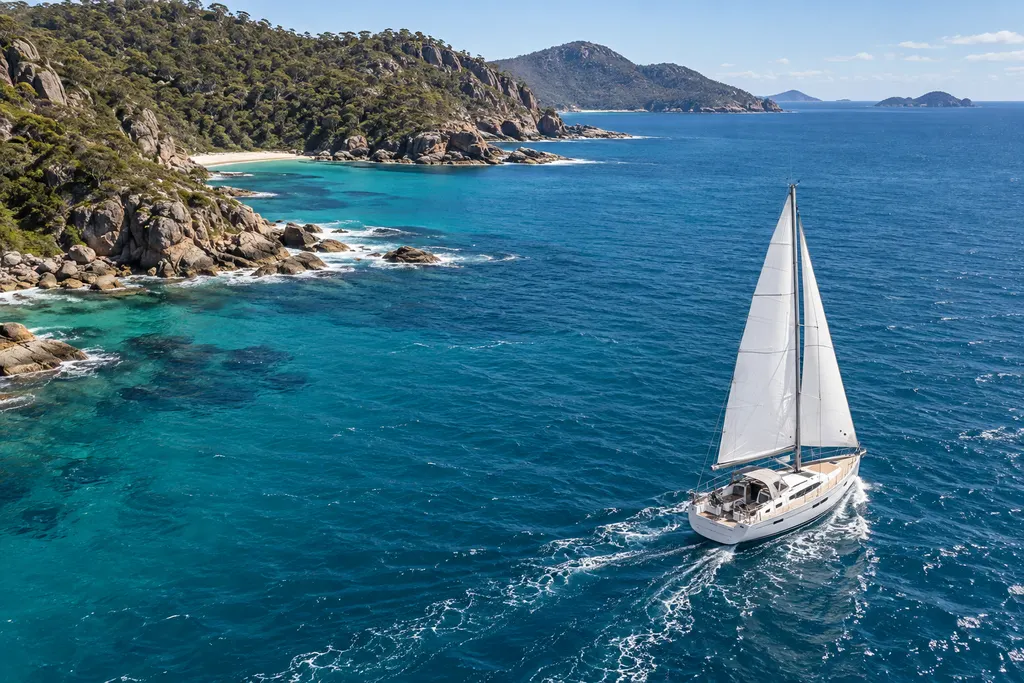
Below-deck system · Raymarine
Raymarine Evolution EV-400
Big-boat Evolution: Type 2 and Type 3 drives for yachts and cruisers to 35 tonnes.
- Indicative price
- $8,500–$14,000 unit
- Fitted
- $12,000–$20,000
- Rated for
- Vessels to 35 t
- Editor score
- 77 / 100
The EV-400 is the same Evolution brain with a larger course computer. The ACU-400 delivers the current a Type 2 or Type 3 drive needs, on 12 or 24 V, which takes the system from 11 tonnes up to about 35 tonnes displacement. It is the Raymarine pack for 45–60 foot cruising yachts, heavy steel and timber boats, larger catamarans and motor cruisers with big hydraulic rams.
Beyond the drive size, the behaviour is identical to the EV-200: same EV-1 sensor, same p70s or Axiom control, same adaptive tuning. The important decision is the drive. A Type 2 short or long suits most heavy yachts; a Type 3 handles the biggest; a Type 2 or Type 3 hydraulic pump suits motor cruisers with large cylinders; and a constant-running pump with a solenoid valve block is available for vessels with power steering.
Installers treat this as a project. The drive loads on a 20-tonne boat are large, so the mounting structure, rudder stops and the all need to be engineered rather than improvised.
Verdict
Raymarine Evolution EV-400 drive sizing
Type 2 short : to 15,000 kg. Type 2 long: to 20,000 kg. Type 3: to 35,000 kg. Hydraulic pumps sized to cylinder volume from roughly 230 cc up to 500 cc and beyond with constant-running pumps.
Specifications
Autopilot components, voltage and steering modes
- Sensor
- EV-1 nine-axis sensor core
- Course computer
- ACU-400, 12/24 V, high-current output for Type 2 and Type 3 drives
- Control
- p70s / p70Rs or Axiom
- Drives
- Type 2 short/long or Type 3 linear; Type 2 rotary; Type 2/3 hydraulic pumps; constant-running pump with solenoids
- Feedback
- Rudder reference transducer (required)
- Voltage
- 12 V or 24 V DC
- Network
- SeaTalkng, NMEA 2000 (via adaptor)
- Power draw
- 3 A typical, 20 A peak. Type 2 and Type 3 drives draw more when working; a 24 V system halves the current for the same power.
- Steering systems
- Mechanical wheel (cable, chain or rod); Hydraulic
Modes
- Auto
- Wind vane
- Track
- AutoTack / AutoGybe
- Pattern steering
Features
- Covers vessels to 35 tonnes with the right drive
- 24 V compatible for bigger electrical systems
- Same Evolution AI behaviour as the smaller packs
- Solenoid and constant-running pump support for power-steered vessels
For and against
Autopilot strengths and limitations
- One family from 28 feet to 60 feet keeps the interface familiar
- Heavy-duty drives with long service histories
- Australian dealer support for the large-boat market in Sydney, Gold Coast, Perth and Melbourne
- Expensive once the drive and engineering are included
- Overkill for anything under 11 tonnes
- Installation quality varies; use a yard that has done heavy yachts before
Who fits it
Boats and places where this system is recommended
Boat types
- Wheel-steered cruising yachts → For heavy cruisers over 11 tonnes.
- Catamarans and multihulls → For larger and heavier charter-style cats.
- Displacement motor cruisers and trawlers → With a large pump or solenoid interface, the Raymarine answer for heavy cruisers.
Australian waters
- Brisbane and Moreton Bay → The right answer for a heavy 45 foot plus cruising catamaran or a serious long-range monohull. Cats carry windage and need authority on the rudders, and this is the pack that will still be steering when the trades are up and the boat is loaded for six months away.
- Darwin and the Top End → For heavy cruising yachts and long-range motor boats pushing against three and four knot streams. The extra capacity is not about displacement alone, it is about rudder loads when the tide is running hard against you.
Questions
Raymarine Evolution EV-400: frequently asked
Type 2 short or Type 2 long linear drive?
The long drive has more stroke for boats with a longer tiller arm and larger rudder angles, and is rated to 20 tonnes against 15 for the short. Raymarine's drive selection guide matches stroke to your tiller arm length; an installer will measure it.
Can the EV-400 run on 24 V?
Yes. The ACU-400 accepts 12 or 24 V, and most drives are available in 24 V versions. On a 24 V boat the current draw roughly halves for the same steering effort.
Alternatives to consider
The systems most often weighed against this one.
- Below-deck systemB&G
B&G NAC-3 Autopilot (Triton2 Pilot Controller)
- Indicative
- $4,300–$5,300
- Editor score
- 77
- Below-deck systemFuruno
Furuno NavPilot 711C
- Indicative
- $4,500–$6,800
- Editor score
- 73
- Below-deck systemGarmin
Garmin Reactor 40 (Hydraulic, Mechanical, Steer-by-wire and Sail)
- Indicative
- $2,900–$5,200
- Editor score
- 83
Other below-deck system systems
- Below-deck systemRaymarine
Raymarine Evolution EV-150 Hydraulic
- Indicative
- $3,900–$4,900
- Editor score
- 70
- Below-deck systemRaymarine
Raymarine Evolution EV-200 (Sail and Power)
- Indicative
- $5,900–$7,600
- Editor score
- 80
- Below-deck systemB&G
B&G NAC-2 Autopilot (Triton2 Pilot Controller)
- Indicative
- $3,400–$4,200
- Editor score
- 70
- Below-deck systemSimrad
Simrad AP44 with NAC-2 or NAC-3
- Indicative
- $3,300–$5,800
- Editor score
- 77
Head to head
Comparisons featuring this system
Autopilot commissioning and operator training
A $20,000 installation with no handover is a gamble. Half a day on the water with the installer or an instructor covers the modes, the override, the alarms and a failure drill. It is the cheapest safety equipment aboard.