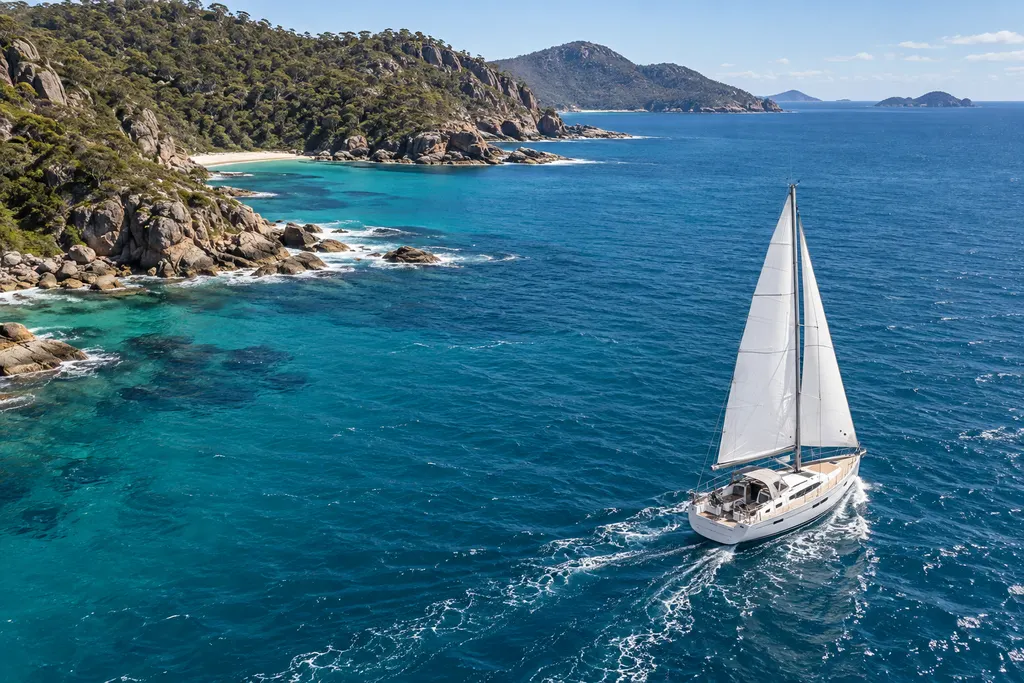
QLD · Regional guide
Marine autopilots Cairns and Far North Queensland
Autopilot choice and use in the tropics: the inner reef route, Trinity Inlet, game boats off the Ribbon Reefs, shipping lanes, heat, humidity and cyclones.
- State
- Queensland
- Waters
- Trinity Inlet and the Cairns marinas, Port Douglas and the Low Isles, The inner reef route north to Cooktown and Lizard Island
- Recommended
- 4 systems
- Reviewed
- September 2026
North of Cairns the coast and the Great Barrier Reef form a corridor. Inside it the water is often flat, the distances are long and the navigation is precise, with reef on one side and coast on the other. That corridor is also a shipping lane, used by large vessels under pilotage, so a recreational boat steering itself for hours is sharing narrow water with ships that cannot alter much.
This is the game fishing capital of the country. Black marlin season from about September to December brings heavy boats out to the Ribbon Reefs, and those boats spend whole days steering slow, precise patterns. It is also charter country, with dive and sailing operators working out of Cairns and Port Douglas year round.
The tropics themselves are the other factor. Heat, humidity, salt and lightning are harder on marine electronics than any sea state, and the wet season from November to April brings cyclones. Where you mount a course computer here matters as much as which one you bought.
Waters covered
- Trinity Inlet and the Cairns marinas
- Port Douglas and the Low Isles
- The inner reef route north to Cooktown and Lizard Island
- The Ribbon Reefs and the outer barrier
- Hinchinbrook Channel
- Townsville and Magnetic Island to the south
Browse all places on this map
Local planning notebook
Autopilot passage and installation planning in Cairns and Far North Queensland
Before a longer Far North Queensland itinerary, save manuals, model numbers, wiring photographs and support contacts offline. Check the condition of exposed connectors and the documented power arrangement. A clear equipment record makes remote diagnosis more productive.
What to ask at the handover
Confirm which source supplies heading and navigation data, then record it. Review the plan for manual steering and identify the shared components in any claimed backup system.
A useful spares kit →Before leaving Cairns and Far North Queensland
This is planning context, not a live forecast or navigation instruction. Check the information that can change before each trip.
Maritime Safety Queensland ↗Bureau of Meteorology marine forecasts ↗Prepare a brief for a local installer →Regional equipment suggestions are editorial starting points. They do not identify a local branch, approved installer or business affiliation.
Cairns trade winds, tides and tropical electronics maintenance
The south-east trades blow hardest from May to October and can sit at 20 to 25 knots for weeks. Inside the reef the fetch is limited, so the sea is short rather than large, but it is persistent and it works a pilot continuously. Tidal streams run strongly through the channels and around the headlands, and in places like Hinchinbrook the stream decides your schedule.
The wet season reverses the picture: light and variable winds, monsoon north-westerlies, violent afternoon storms and the possibility of a cyclone forming close by. Boats that cruise here through summer plan around the Bureau of Meteorology tropical outlooks and keep a refuge in mind at all times.
Heat is the quiet enemy. A course computer mounted in an unventilated locker behind the engine bay will run hot for months, connections corrode in humid salt air, and a display in the tropical sun works harder than the same unit in Hobart. Installation and environmental conditions belong in the fault assessment alongside the equipment itself.
- South-east trades 20 to 25 knots through the dry season
- Strong tidal streams in the channels, notably Hinchinbrook
- Wet season from November to April with storms, monsoon winds and cyclones
- Heat, humidity and salt corrosion shortening electronics life
- Large ships under pilotage using the inner route and the reef shipping lanes
Mount it where it can breathe
Cairns fishing, charter and cruising autopilot requirements
The heavy end of the local fleet is game boats from 12 to 18 metres with inboard power and hydraulic steering, running out to the reef for weeks at a time in the marlin season. They need a pilot that steers precisely at trolling speed, holds a heading at cruise and can be taken over instantly when a fish is hooked.
Charter and dive vessels, many operating commercially and surveyed, sit alongside them, along with a steady stream of cruising yachts working north on the inner route. Those yachts are usually shorthanded, and they will use the pilot for 90 per cent of their engine hours on the way to Lizard Island and beyond.
- Game boats 12 to 18 m: 24 V hydraulic pilot with precise slow-speed control
- Charter and commercial vessels: robust systems with survey requirements
- Cruising yachts on the inner route: below-deck drive plus a backup plan
- Hydraulic outboard sportfish boats: outboard-specific pilot with instant override
Recommended
Systems that suit Cairns and Far North Queensland
Built for exactly this: long days at 24 V on a heavy hydraulic boat, with the low-speed control a game boat needs while trolling the Ribbons. It is also the system most local commercial operators will be familiar with.
A practical fit on a mid-size hydraulic sportfish or flybridge boat out of Cairns or Port Douglas. Shadow Drive matters in reef country, where you alter course for coral, bait and boats constantly.
The option for hydraulic outboard boats fishing the closer reefs. Fantum Feedback saves fitting a rudder reference, which is one fewer thing to corrode in a tropical transom.
The cruising yacht answer for the run north to Lizard Island and Cooktown. Below-deck gear, mounted somewhere ventilated, will steer the inner route for days in the trades.
Passages
Typical local passages and the autopilot on each
Cairns to Port Douglas
About 30 miles inside the reef, usually with the trade behind you. Track steering suits the leg, but the Low Isles area and the approaches carry reef and small craft traffic, so keep the last few miles manual. Leaving Trinity Inlet, watch the tide and the commercial traffic before you engage anything.
North to Lizard Island
A multi-day run up the inner route with anchorages along the way. The pilot will do most of the steering, which makes watchkeeping discipline the real safety system. Keep AIS running, plot around the shipping route where you can, and always close an anchorage in good light.
Out to the Ribbon Reefs
The marlin run. Long hours of precise trolling patterns where the pilot holds the line while the crew works the gear, then instant manual takeover when a fish comes up. Check the hydraulic fluid and filters before the season, because a pump that fails out there ends the trip.
Hinchinbrook Channel
A beautiful, narrow, tidal passage with shallow bars at both ends. Time it with the tide, keep the pilot on a short leash and treat the chart as an approximation over the sand. The scenery is a poor excuse for an unattended helm.
- Reef, bommies and narrow marked channels along the inner route
- Ships under pilotage in the Great Barrier Reef shipping routes
- Strong tidal streams through Hinchinbrook and the island passages
- Cyclones and violent storms in the wet season, November to April
- Estuarine crocodiles in the rivers and creeks, which makes a man overboard worse in every way
- Heat, humidity and corrosion degrading connections and course computers
Autopilot training options in Cairns and Far North Queensland
Cairns has a working marine industry, which is good news for training. Commercial skipper and coxswain courses run here for the charter and fishing fleets, Australian Sailing affiliated clubs operate in Cairns and Townsville, and there are instructors who will teach on your own boat. If you are new to reef navigation, a day with someone who runs these waters commercially is money well spent.
Installers in the Cairns marine precinct handle everything from trailer boats to survey vessels, and they understand tropical installation standards. Indicative costs: half-day handover $300 to $600, private on-water tuition $90 to $150 an hour, RYA Day Skipper practical over five days $1,800 to $2,600. Confirm current pricing with the provider.
- Ask about cable specification, sealing and ventilation, not just the head unit
- Have the installer demonstrate low-speed steering behaviour if you troll
- Learn the alarms you can hear over a tropical downpour and two diesels
- Understand the reef shipping routes and where large vessels are constrained
Questions
Cairns and Far North Queensland: frequently asked
Is an autopilot safe to use inside the reef?
Yes, between marks in deep water, provided someone is watching. The inner route carries ships under pilotage and plenty of unlit small craft, so the electronics steer and the crew keeps the lookout that COLREGs Rule 5 requires. Near coral, hand steer in good light.
What kills autopilots in the tropics?
Heat, humidity and poor installation, far more often than the brand. Ventilated mounting, tinned cable, properly sealed joints and annual servicing add years to a system here. If your unit lives behind the engine in an unventilated locker, expect trouble.
Do I need a special pilot for game fishing?
You need one that steers accurately at trolling speed and hands control back instantly. Many hydraulic systems designed for cruising are lazy at four or five knots. Ask specifically about low-speed performance and about how the pilot behaves when you spin the wheel on a strike.
How should I plan for cyclone season?
Watch the Bureau of Meteorology tropical outlooks, have a storm plan and a berth or creek you can reach, and check your insurance conditions early. Many owners move the boat south for the wet. None of that involves the autopilot, but all of it involves not being at sea when a system forms.
Recommended systems at a glance
- Below-deck systemFuruno
Furuno NavPilot 711C
- Indicative
- $4,500–$6,800
- Editor score
- 73
- Below-deck systemGarmin
Garmin Reactor 40 (Hydraulic, Mechanical, Steer-by-wire and Sail)
- Indicative
- $2,900–$5,200
- Editor score
- 83
- Outboard / trailer boatFuruno
Furuno NavPilot 300
- Indicative
- $3,600–$5,200
- Editor score
- 77
- Below-deck systemRaymarine
Raymarine Evolution EV-200 (Sail and Power)
- Indicative
- $5,900–$7,600
- Editor score
- 80
Nearby regions in Queensland
Instruction in Cairns and Far North Queensland
The training section explains what a good instructor covers and the ten questions that sort them. Ask for a session on your own boat, in a seaway, with a failure drill.