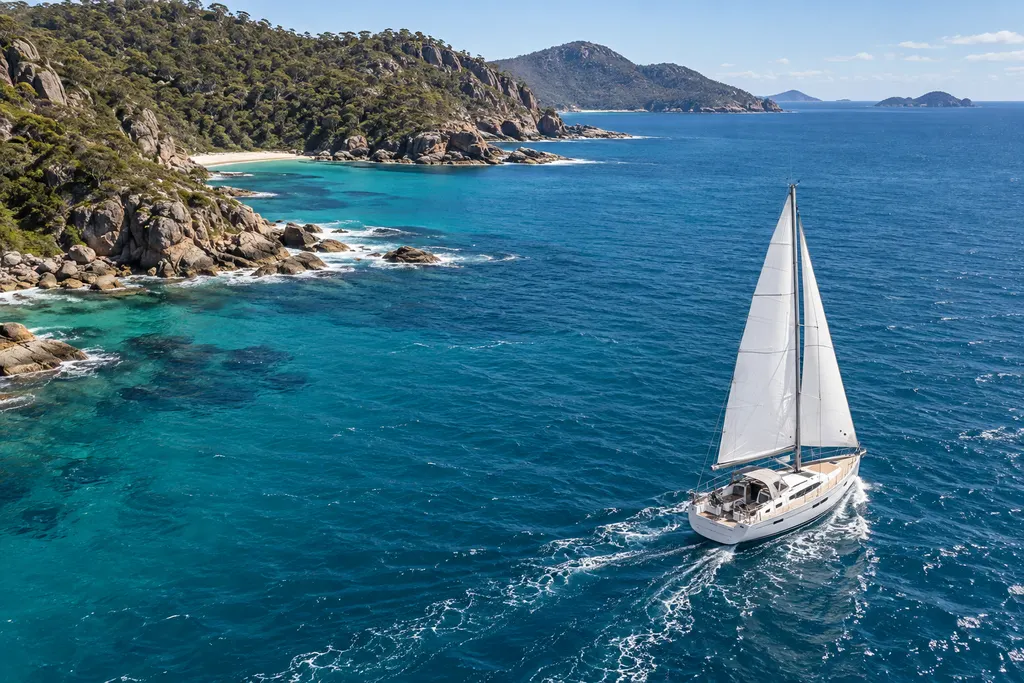
TAS · Regional guide
Marine autopilots Hobart and the D’Entrecasteaux Channel
Cold water, roaring forties westerlies and Storm Bay: autopilot advice for the Derwent, the Channel, Bruny Island and the Tasmanian east coast.
- State
- Tasmania
- Waters
- The Derwent River, The D’Entrecasteaux Channel and Bruny Island, The Huon River
- Recommended
- 4 systems
- Reviewed
- September 2026
Tasmania gives you two kinds of water within a few miles of each other. The Channel and the Huon are sheltered, deep and beautiful, the sort of place where a boat can potter for a month. Storm Bay, immediately outside, is open to the Southern Ocean and can be genuinely dangerous when a south-easterly swell meets a hard westerly.
The weather comes from the roaring forties. Fronts arrive from the west in a procession, the Derwent adds its own valley effects that have decided more than one race finish, and the water is cold enough year round that a person overboard has a very short window. That single fact should shape how you use an autopilot here more than any other.
The fleet is different too. Hobart has one of the finest collections of timber and classic yachts in the world, celebrated at the wooden boat festival, and many of them carry older electronics or none at all. Fitting a modern pilot to a fifty-year-old hull is a regular job here, and it takes more thought than a bolt-on kit.
Waters covered
- The Derwent River
- The D’Entrecasteaux Channel and Bruny Island
- The Huon River
- Storm Bay and the Tasman Peninsula
- Port Arthur and the coast to Maria Island
- Freycinet and the east coast to Bass Strait
Browse all places on this map
Local planning notebook
Autopilot passage and installation planning in Hobart and the D’Entrecasteaux Channel
For a Hobart or Channel boat, check how the helm is used when the crew is wearing normal passage clothing and the cockpit is dark. Readability, access to standby and a clear handover are practical parts of the system, not finishing touches.
What to ask at the handover
Dim each display separately and practise finding the active mode. Review any exposed extension to the itinerary independently of the boat’s familiar sheltered-water performance.
Night display setup →Before leaving Hobart and the D’Entrecasteaux Channel
This is planning context, not a live forecast or navigation instruction. Check the information that can change before each trip.
Marine and Safety Tasmania (MAST) ↗Bureau of Meteorology marine forecasts ↗Prepare a brief for a local installer →Regional equipment suggestions are editorial starting points. They do not identify a local branch, approved installer or business affiliation.
Hobart westerly fronts, Storm Bay conditions and cold water
Westerlies dominate. They come through in waves ahead of and behind fronts, they gust hard off the hills, and in the Channel they funnel and bend so the wind you get is rarely the wind in the forecast. A pilot steering to in that environment will chase every bend, so most local sailors use compass or track modes inshore and save wind steering for open water.
Storm Bay deserves its name. A south-east swell running into a westerly gale produces a short, steep, breaking sea, and the crossing to Port Arthur or around the Tasman Peninsula in those conditions is a serious undertaking. Plan it with a real weather window, and do not rely on the pilot to steer a heavily loaded boat downwind in a breaking sea without supervision.
The water is cold all year, which changes the calculus of shorthanded sailing. If you go over the side in the Channel in July, the person left aboard has minutes rather than hours. Tethers, tight off-course alarms and a genuine recovery plan matter more here than in any warm-water region in this guide.
- Persistent westerlies and frontal systems from the Southern Ocean
- Strong gusts and wind bends funnelling through the Channel and the Derwent
- Storm Bay with a short, steep sea when swell meets a westerly
- Cold water year round, with rapid onset of hypothermia
- Aquaculture leases and salmon pens through parts of the Channel
Cold water makes the tether non-negotiable
Hobart cruising and racing yacht autopilot requirements
The classic fleet is the most distinctive thing about Hobart. Timber cruising boats, couta boats and restored yachts, many with long keels, narrow sterns and steering systems that were never designed with an autopilot in mind. On those boats an above-deck wheel unit is often the honest answer, because it can be fitted without cutting into a hull that deserves better.
Alongside them are modern cruising yachts working the Channel and the east coast, offshore racing boats that finish the Sydney Hobart or sail the east coast races, and a commercial fishing fleet working in water that is frequently unpleasant. All of them face the same issue: the gear is used hard, in the cold and the wet, a long way from a big dealer network.
- Classic timber yachts: above-deck wheel pilot, minimal modification
- Tiller-steered cruisers going offshore: heavy duty cockpit pilot, submersible if possible
- Modern cruising yachts 38 to 46 ft: below-deck drive with track steering
- Offshore racing boats: fast-response sailing pilot with redundancy
Recommended
Systems that suit Hobart and the D’Entrecasteaux Channel
A good fit for the classic wheel-steered fleet. It bolts above deck, it does not require cutting a timber hull for a below-deck ram, and it is mechanically simple enough to keep running in a place where parts take a week to arrive.
For a tiller-steered boat that actually sails offshore from here. The external actuator is submersible, which matters when the cockpit takes green water in Storm Bay, and the system is designed to be serviced by the owner.
The mainstream choice for a modern 40 to 45 foot cruiser doing the Channel, the east coast and the occasional Bass Strait crossing. Below-deck authority is what holds a course when the sea gets behind you off Tasman Island.
The pick for offshore racing boats based on the Derwent. High-current drive support and quick response are what a loaded-up boat needs in the sort of weather this coast produces regularly.
Passages
Typical local passages and the autopilot on each
Derwent to Kettering and down the Channel
Sheltered water with unsheltered wind. Expect big shifts and gusts off the hills, so use compass or track steering rather than wind mode, and keep clear of the marked aquaculture leases. Mooring fields and ferry movements around Kettering mean the last mile is a hand-steering job.
Across Storm Bay to Port Arthur
The crossing that demands a real forecast. In a westerly with a south-east swell it becomes steep and breaking, and the tide around the Tasman Peninsula adds to it. Get the boat balanced, reduce sail early, and be ready to hand steer in the worst of it rather than watching the pilot fight.
North to Maria Island and Freycinet
A magnificent coastal run with genuine anchorages and cold, clear water. Use the pilot for the long legs and take the helm for the approaches, several of which are rock-bound and best done in good light. Watch the forecast for the easterly that makes most east coast anchorages untenable.
Finishing a Hobart race up the Derwent
The famous last few miles, where the breeze dies, backs and fills in from a different quadrant. Boats hand steer this, and for good reason: a pilot cannot read a dark patch of water ahead. It is an object lesson in what autopilots are and are not for.
- Salmon farm leases and pens in parts of the Channel, with moorings extending beyond them
- Cold water and rapid hypothermia in a man overboard
- Storm Bay in a westerly against a south-east swell
- Strong gusts and wind bends off the hills in the Channel and the Derwent
- Floating kelp and timber debris after a blow
- Commercial and cruise shipping in the Derwent, plus Antarctic support vessels
Autopilot training in Hobart and the Channel
Australian Sailing affiliated clubs on the Derwent and around the Channel run courses and, just as valuably, have members who have sailed this coast for decades and will tell you exactly which anchorage to avoid in a north-easterly. Marine and Safety Tasmania sets licensing and safety equipment requirements, and its local knowledge material is worth reading before you cruise the Channel.
Installers work out of Hobart and the Channel boatyards, and they are used to fitting modern systems to older boats. Ask for a handover that includes the cold and wet reality of sailing here, including glove-friendly operation. Indicative costs: half-day handover $300 to $600, private on-water tuition $90 to $150 an hour, RYA Day Skipper practical over five days $1,800 to $2,600. Confirm with the provider.
- Ask whether you can operate the keypad wearing sailing gloves
- Have the alarms set loud enough to hear through a closed companionway
- Discuss drive mounting carefully on a timber hull before anything is cut
- Check safety equipment and licence requirements with MAST
Questions
Hobart and the D’Entrecasteaux Channel: frequently asked
Can I use wind steering in the Channel?
You can, but the wind bends and gusts off the hills so much that the pilot will chase it. Most local sailors use compass or track modes inshore and keep wind steering for Storm Bay and the open east coast where the breeze is more consistent.
Are the salmon pens really a hazard?
Yes. Aquaculture leases occupy substantial areas of the Channel and their moorings and lines can extend beyond the visible pens. Keep current charts, note the marked lease areas, and do not let a waypoint route on autopilot take you through one at night.
What should I fit to a classic timber yacht?
Usually an above-deck wheel pilot, because it can be fitted without structural modification and removed without a trace. If you need below-deck gear for offshore work, involve a shipwright in the drive mounting rather than leaving it to the electronics fitter.
How should cold water change my autopilot habits?
It should make you treat the pilot as a reason to be more careful, not less. Clip on whenever you leave the cockpit, keep alarms audible below, and rehearse a recovery. In Tasmanian water the margin between an incident and a fatality is measured in minutes.
Recommended systems at a glance
- Wheel pilotCPT
CPT Autopilot (wheel pilot)
- Indicative
- $4,500–$5,600
- Editor score
- 53
- Tiller pilotPelagic
Pelagic Autopilot
- Indicative
- $2,800–$4,800
- Editor score
- 60
- Below-deck systemRaymarine
Raymarine Evolution EV-200 (Sail and Power)
- Indicative
- $5,900–$7,600
- Editor score
- 80
- Below-deck systemB&G
B&G NAC-3 Autopilot (Triton2 Pilot Controller)
- Indicative
- $4,300–$5,300
- Editor score
- 77
Instruction in Hobart and the D’Entrecasteaux Channel
The training section explains what a good instructor covers and the ten questions that sort them. Ask for a session on your own boat, in a seaway, with a failure drill.